SOUL.md

The Root Configuration File for DevRel
📹 by: Joey deVilla
Introduction & Context
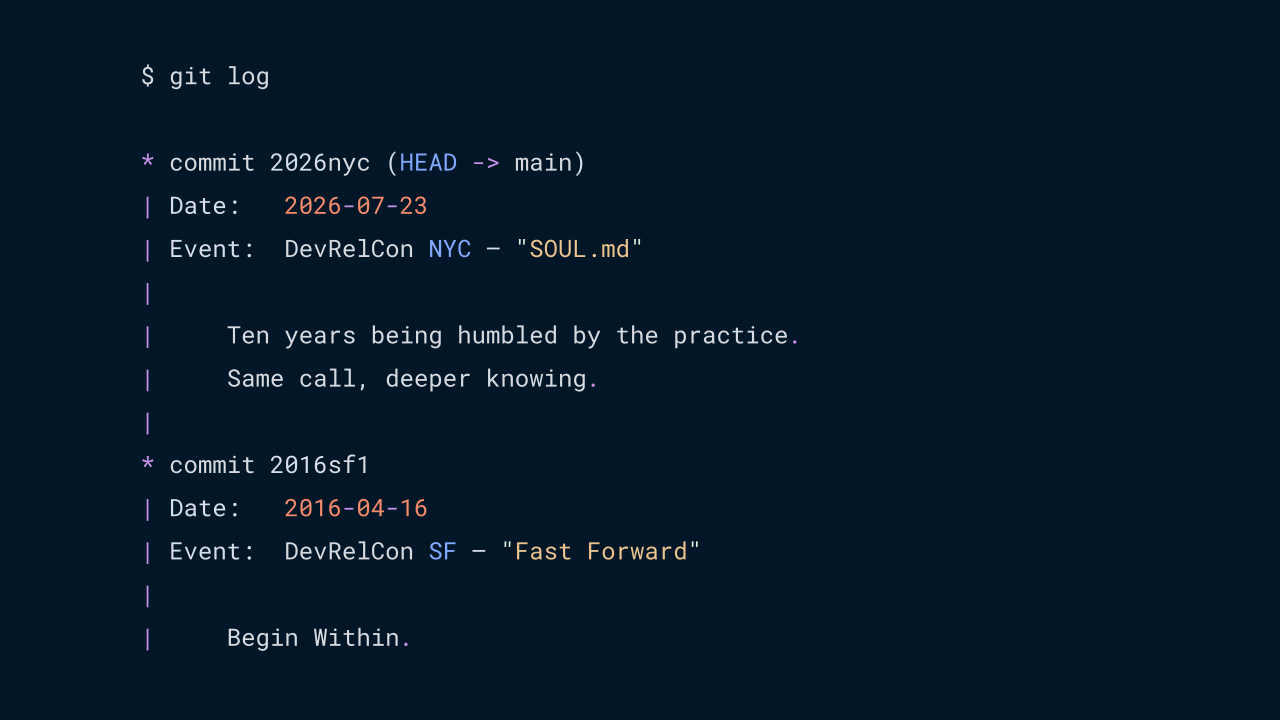
This post is a companion piece to a talk I gave at DevRelCon.
Because it was a seven-minute lightning talk, I couldn't share on stage all the context and nuance the topic deserves. So, this post lets:
- Attendees who saw my talk: hear the backstory of why I chose to share this message here/now, and look more closely at what we covered together.
- Those who couldn't attend: receive the same message and retrieve the same resources, even if you couldn't be there in person.
- While this was tailored to attendees at a conference about Developer Relations, it's a message for everyone. Don't let the techy metaphor scare you away.
You can view the slides here or below and watch the recording:
SOUL.md: The Root Configuration File for DevRel (A talk at DevRelCon 2026)
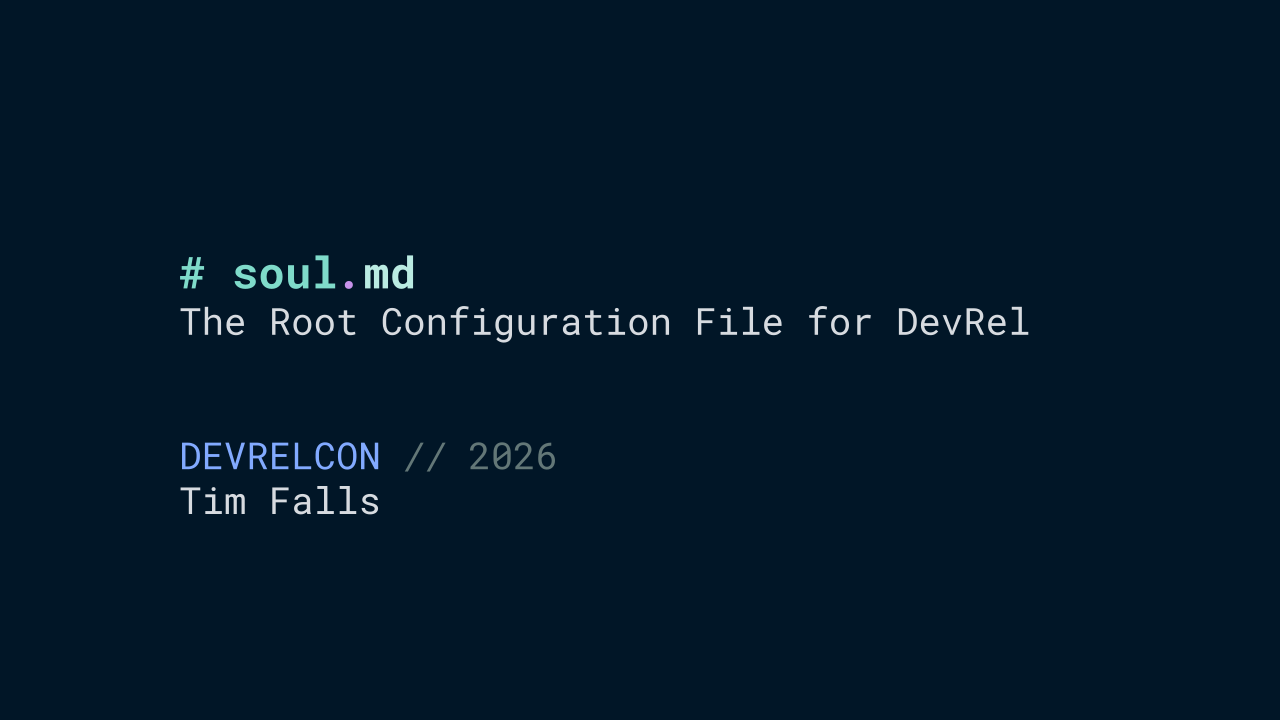
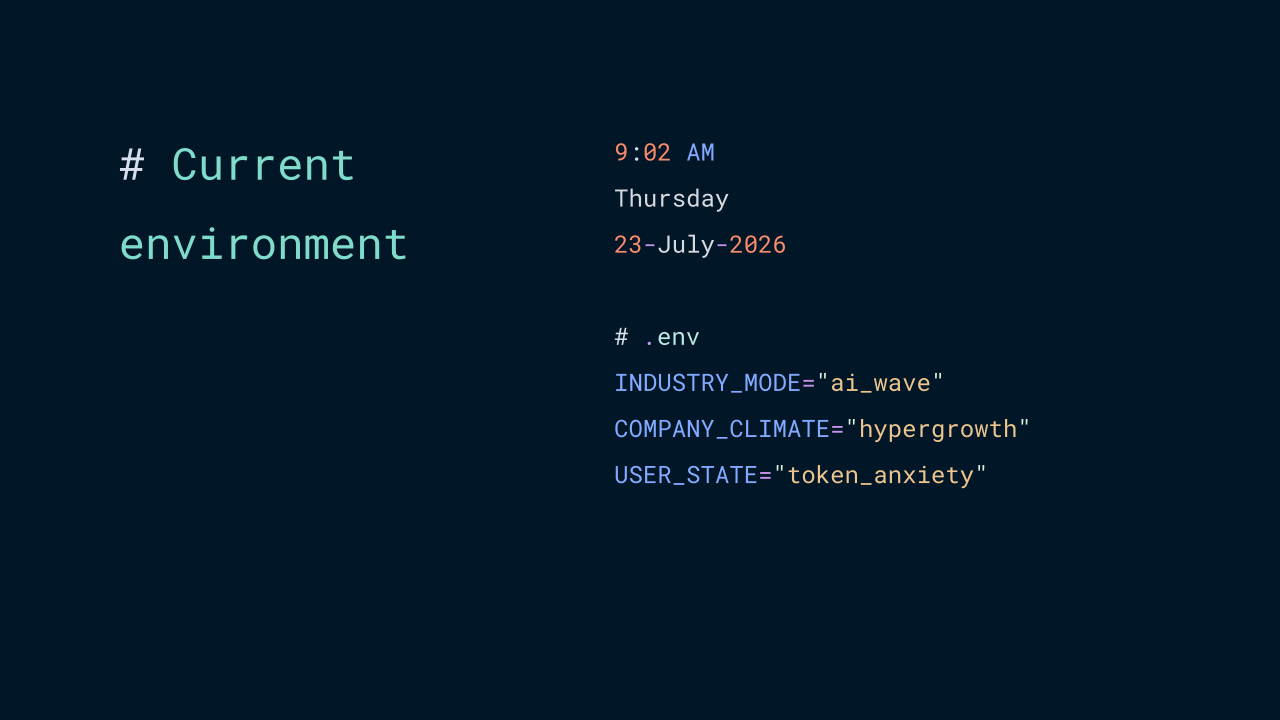
Slides from my talk, also viewable here.
The talk (in three parts)
Pt 1: The Current Environment
The foundation of this talk is a clear-eyed acknowledgment of the incredibly unique and immensely important moment we're in right now – in terms of our individual lifetimes, and on the broader timeline of humanity.
"This moment" is largely characterized by AI and everything that comes along with it: the hype, the noise, the rapidly changing realities and expectations, the excitement, the uncertainty, the predictions, the hope, the fear, the optimism, the injustice, the abandonment of common sense.
For those of us working in tech companies (most of us at DevRelCon), AI is the dominant and driving force of the noise and chaos swirling around.
We're experiencing this at the industry level, the company level, the team level, and ultimately the personal nervous system level. Each of us has our own experience, of course, but there are many relatable emotions, dynamics, and situations we're all navigating.
Pt 2: Recognizing our agency and role
So much of this feels - and very much is - completely outside our control (like almost everything in life). But our own actions and decisions remain in that limited zone of things we have agency over.
Many of us work in tech companies building frontier AI technology. And if we're not building those world-changing platforms, we're using them and using other products that use them, too. And while much of that use is free (for now), the rest of it goes into our spending budgets - corporate and household.
I believe we have a collective and individual opportunity and responsibility to guide AI by being informed and intentional about what/why/how we build and what we buy and otherwise support.
Of course, our decisions go beyond using and paying for products and services. We decide and/or influence company decisions about what events to sponsor, speak or exhibit at. We consume, create, and amplify content that advertises other brands. We co-sponsor, co-market, and co-llab.
Whether we're working independently, looking for our next gig, or making calls for our employer, we're each nudging the whole industry forward with our everyday decisions and actions. May we choose wisely.
Pt 3: SOUL.md - how do you want to show up rn?
A SOUL.md file is a resource to support anyone in a process of self-inquiry, introspection, and reflection, to get really clear on how they want to show up for this moment and identify their north star(s) for navigating it.
It's literally a digital document hosted on Github.com, that serves as a sort of journaling template.
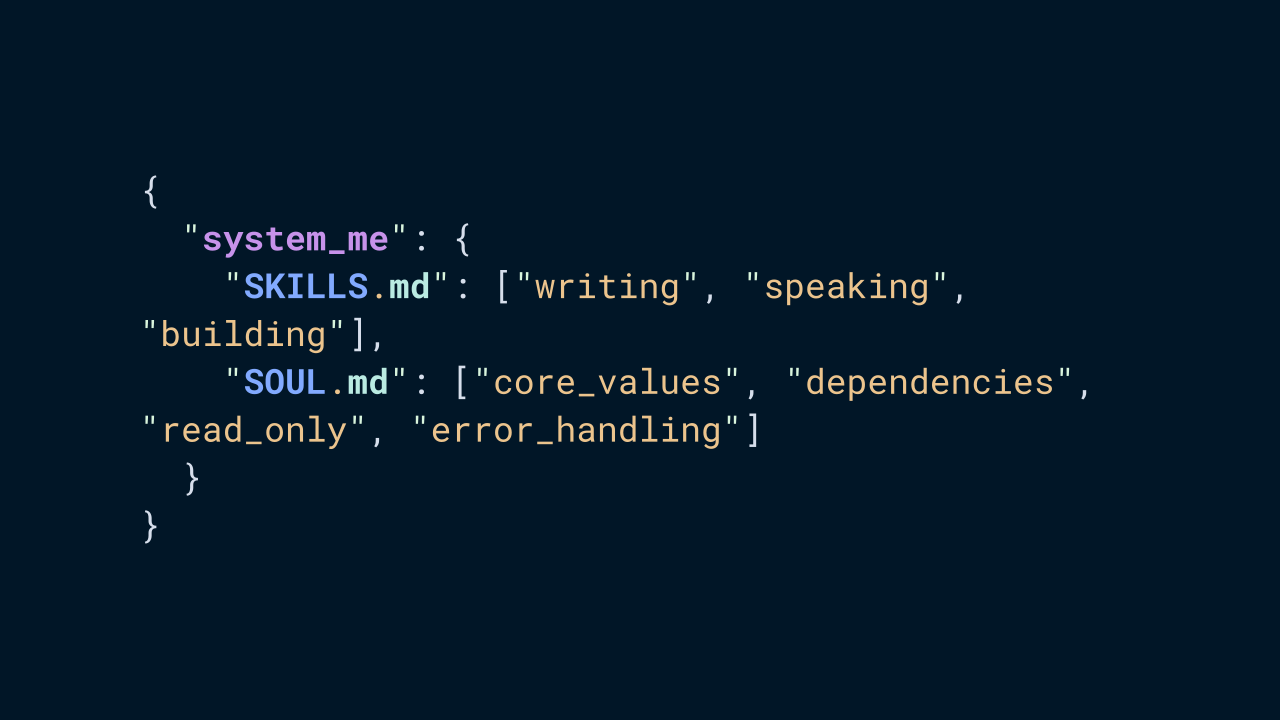
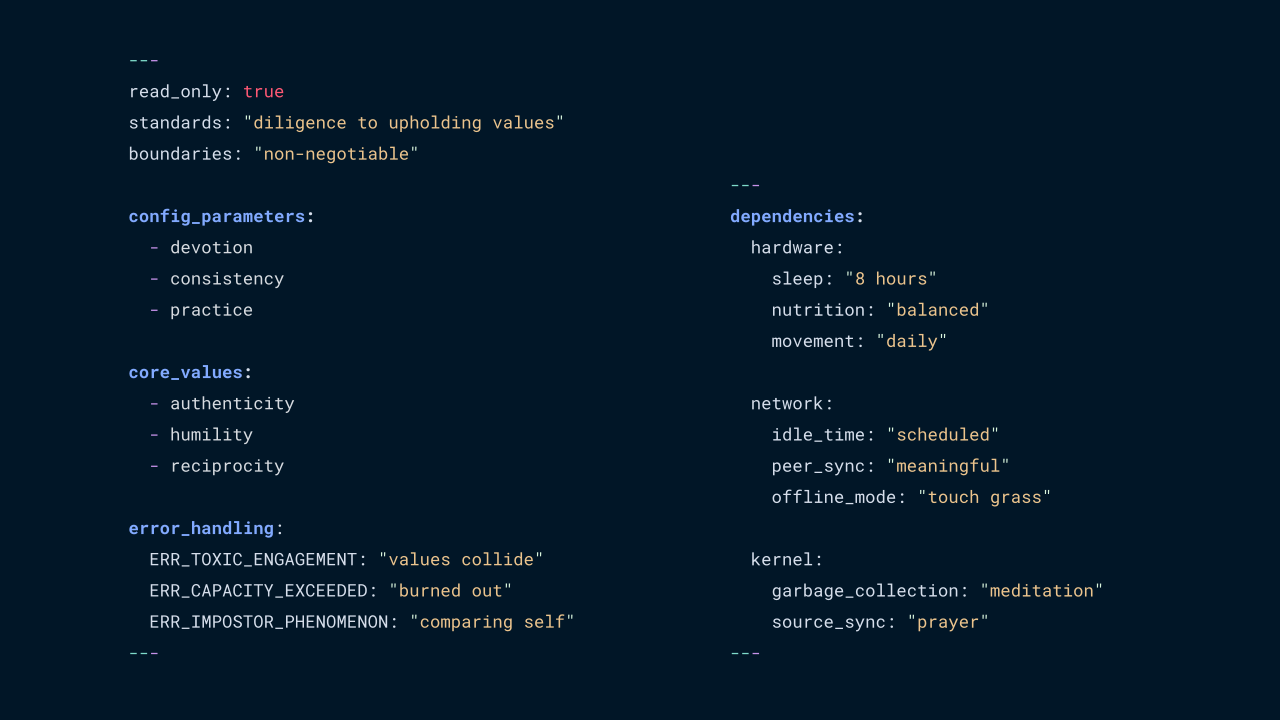
In a SOUL.md file, there are five main components:
- Core values — the principles I firmly believe in stand for.
- Standards – how I hold myself to my values.
- Dependencies — system requirements. The conditions I need to thrive.
- Boundaries – non-negotiable rules to protect your time, energy, and ethics.
- Error handling — how I know when my system is out of balance, and protocols for regulating and bringing myself back toward balance.
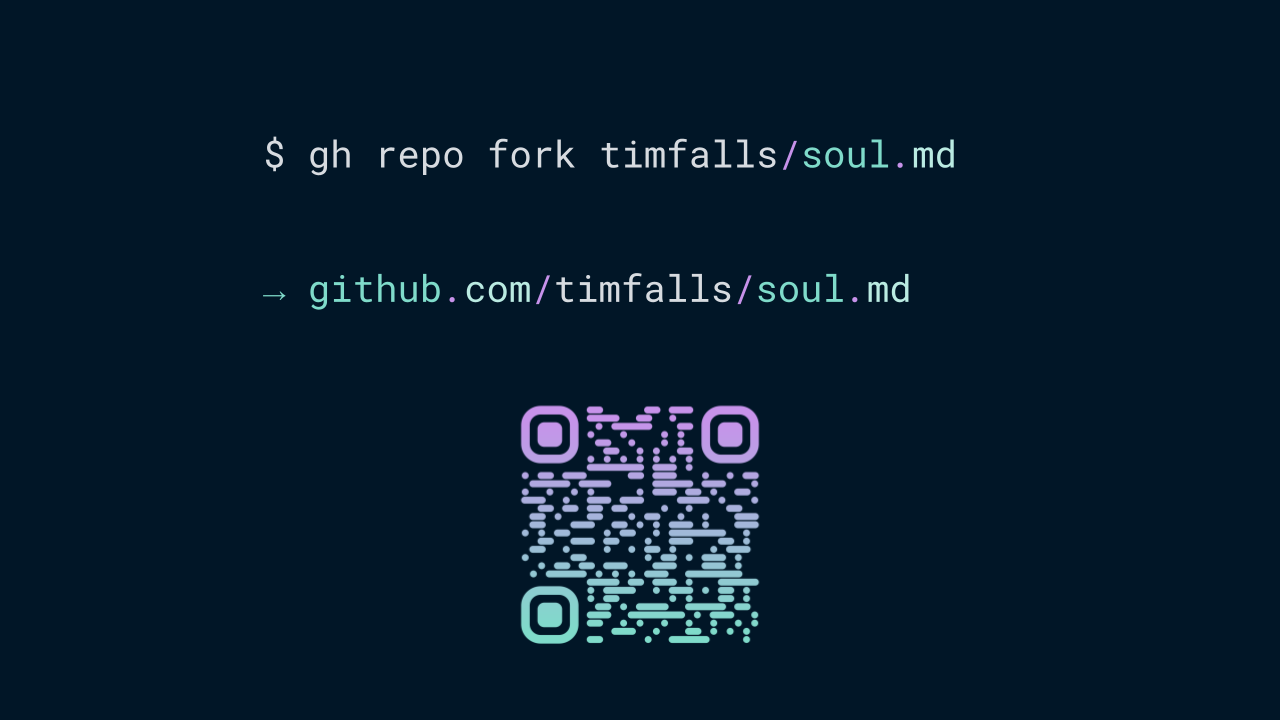
1. Go to the repository on Github
2. Fork it and give it a name unique to you
3. In your new personal repo, go to the SOUL.md file, and edit it to make it yours.
When we're clear on how we want to show up in the world/our work, and we've written it down, we have a compass to guide us – whether making a an especially difficult and consequential decision or taking a trivial, everyday action.
There's power in writing things down. It brings thoughts into the physical world and makes them more real, actionable.
Like a Heartbeat 💗
There's an underlying energy or rhythm that brings all of this to life:
Devotion to consistent practice.
Without this, we don't uphold our values to the standards we aspire to. We neglect our needs, let down our boundaries, ignore the warning signs, and veer off course.
In practical terms, this means we need daily, weekly, monthly, and quarterly rituals and exercises that keep us in touch with our SOUL.md. By returning to it regularly, we can adjust it to reflect the changing seasons of life.
For example, when the stresses at home and work fluctuate – that is, your environment changes – your dependencies may also shift.
On that note, you'll also find in the repo a .env.example file – use this alongside your SOUL.md file, to track current context and capacity based on what we're navigating and what we have available to give.
By returning to our .env and SOUL.md files as a regular practice, the benefits will compound and be more sustained over time.
Why this talk now
Two things:
One) A conversation with Swift, the CEO of Major League Hacking (MLH). Swift and I worked together in DevRel back at SendGrid in 2011. I was a non-developer in a developer-centric role, team, and field of work. So my leadership leaned into the strengths and attributes that served me in all contexts: values, character, intentions; how we showed up, built relationships, and made people feel.
Knowing Swift has a pulse on the industry, I asked him if he thought today’s teams and leaders sufficiently emphasize those same foundational principles. His answer was simple: "No, I don't think so." And my next thought was, "iIt must be time for a reminder."
Two) With increasing frequency, I've observed people - especially in tech -seemingly dismissing common sense when it comes to AI. We’re normalizing things that aren't normal. Things that, if we pause and pay attention, are quite alarming. Things like:
- Prioritizing tokens over people: At a group dinner in SF, someone mentioned feeling anxious because, while they were enjoying being at dinner and among friends, they were also thinking about the Fable tokens that would likely expire at midnight because they weren't home to use them. I sensed genuine conflict in them.
- This is a DEPENDENCIES problem. They're not honoring what they need to thrive.
- Blind consumption: As technology consumers and marketplace participants, we compare models and tools solely on performance, speed, quality, UX. We're often failing to consider who's behind the tech – how do they operate, how is their technology being used, what is one ultimately supporting when they pay for this (ie, where does the money flow?).
- This is a CORE_VALUES and standards problem. Their values may be unclear, or their standards to upholding their values may be lacking, or both.
- Self-imposed suffering: A founder and serial entrepreneur who's building an AI-native company told me: how burned out, fearful, under pressure, and exhausted they were. They acknowledged how unsustainable and illogical it was to try to "keep up" with AI while building a company. They believed this way of being was their only choice, because that's what investors expect. What wasn't acknowledged: They're choosing this. No one was forcing them to live/work this way.
- This is a READ_ONLY problem. Their boundaries are being overwritten by perceived investor pressure.
We’ve built up a narrative that these questionable mindsets, myopic perspectives, this chaos, and our burnout is mandatory. It isn't.
If we pause more often and listen more consciously to what we're saying and thinking, we'll recognize when and where we've veered far from center.
If we pause long enough, we'll also remember that we have the agency to choose differently.
How it started: We heard that AI makes our work easier, makes us more efficient and productive, and frees us to spend our time doing the fun, creative things that only humans can do.
I'm not arguing that's not possible, but I can't deny what I see..
How it's going: I've never seen my friends and colleagues in tech more exhausted, uncertain, and unhappy. Our agents may be working, but meanwhile we're in back-to-backs all day, wondering if anyone in the room/on the screen wants to be there.
Of course, a bigger answer to "Why now?", which becomes apparent when we zoom out from the relatively limited lens of this talk/post (ie, the tech industry and people working in it) to the broader, global landscape of thing.
And that's why this is message is for more than the DevRelCon 2026 audience or DevRel pros.
For everyone.
This talk was tailored for a specific conference audience – "DevRel practitioners in tech companies navigating AI".
And its message and call to action transcend industries and professions. It's not only about software or AI. It's about all the big realities and existential challenges we're facing right now as a people.
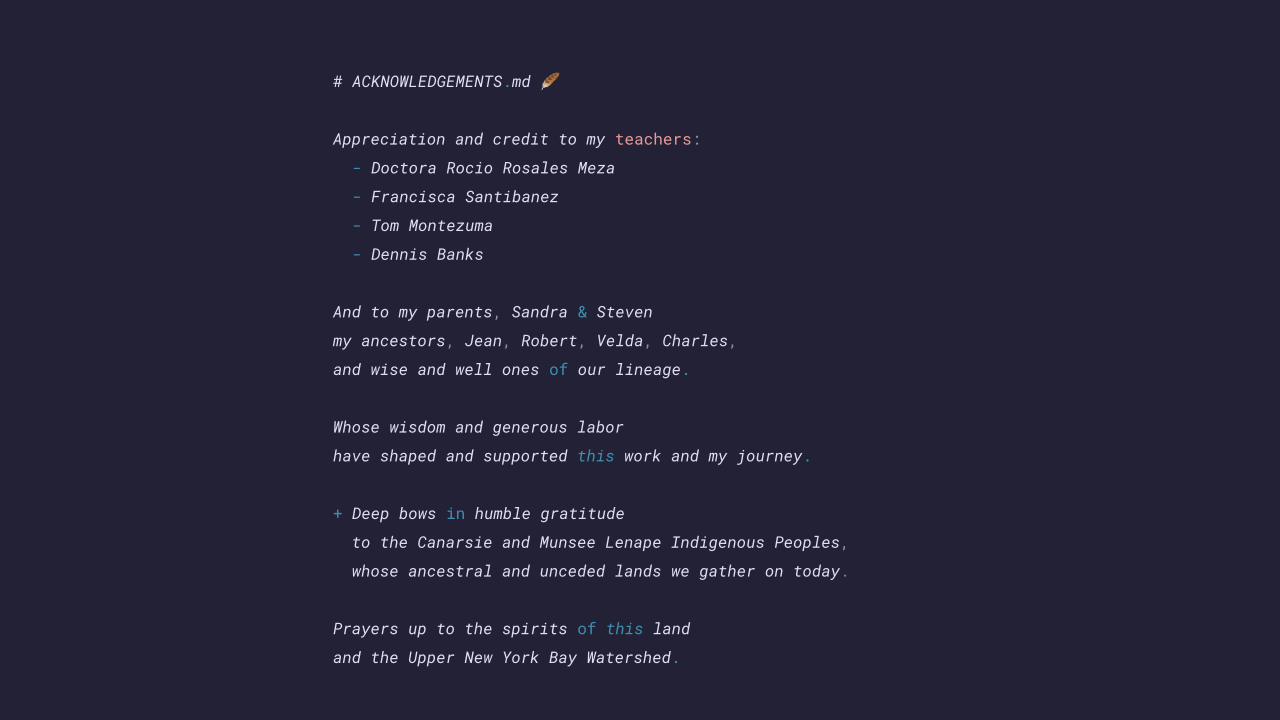
In sharing this, I’m passing along wisdom I've humbly gained from teachers, including Dra. Rocio Rosales Meza and Francisca Santibanez, and teachings rooted in Indigenous understandings of our world.
As I've learned from them, many Indigenous cultures view this moment in human history as a prophesied turning point: a time when the world becomes so upside down that our species are forced to dramatically shift our relationship to everything, back to a way of living in right relationship - a way our ancestors knew well and that forces like colonization would have us forget forever. That inflection point happens when enough of us wake up and recognize the way we're operating has not, does not, and will not work.
The turmoil, chaos, and intensity we see across the world right now are all part of that shift. I expect I'll be navigating this wildness for the rest of this life.
So, while these ideas are useful for (and metaphor'd to appeal to) tech workers, founders, and community leaders in the room at DevRelCon, the message is for all of us. No matter what we do for work, we all have the choice to pause, check our alignment, and decide how we want to show up in the world.
Full acknowledgements of my teachers and ancestors have their own file in the repo, too. I recommend thinking of and thanking those who've supported and shaped you.